

The Australian Government has declared the West Peron formation in the Bonaparte Basin suitable for greenhouse-gas storage, clearing a major regulatory step for an INPEX-led offshore carbon capture and storage proposal with capacity of up to 443 million tonnes.
The formation lies about 260 kilometres from Darwin. INPEX Browse E&P operates the Bonaparte CCS joint venture with a 53% interest, alongside TotalEnergies CCS Australia on 26% and Woodside Energy on 21%.
The declaration is Australia’s first for an offshore saline-aquifer storage site. It recognises the technical viability of the assessed formation and gives the joint venture a pathway from its assessment permit towards a greenhouse-gas holding lease or injection licence.
Ichthys emissions provide the initial anchor
The proposed development is expected initially to store carbon dioxide captured from INPEX’s Ichthys LNG operation near Darwin. The Federal Government said the site could later receive emissions from multiple industrial facilities, creating a larger storage hub in the Bonaparte Basin.
INPEX proposes injection over as long as 35 years. At the upper estimate of 443 million tonnes, the reservoir would provide a substantial long-duration asset for northern Australian LNG and other hard-to-abate industries seeking permanent geological storage.
The joint venture says appraisal work has established a high-quality saline aquifer with thick sealing formations. The declaration follows technical assessment of that storage structure, but it does not authorise construction or carbon injection.
Approval sequence still has several gates
INPEX said the partners will continue technical, environmental, regulatory and commercial work. The project must still secure the necessary titles and approvals, complete engineering and establish a bankable commercial model before a final investment decision.
That distinction is commercially important. The declaration reduces subsurface uncertainty and confirms that the formation can advance through Australia’s offshore storage regime, but it does not commit project capital or set a construction timetable.
If the project proceeds, the delivery scope would extend well beyond the storage reservoir. Carbon capture, compression, transport, offshore injection, monitoring and verification would create work across engineering, subsea services, marine logistics, environmental assessment and specialist well services.
The multi-user ambition also depends on infrastructure and contracts that can connect emitters to the storage system. For suppliers, the near-term opportunity is concentrated in studies, approvals and front-end engineering rather than full construction.
The next formal regulatory milestones are applications for a greenhouse-gas holding lease or injection licence, alongside environmental approvals. Progress through those steps will determine whether West Peron moves from a technically recognised formation to an investable operating asset.
Source notes: Australian Government, 16 October 2026; INPEX Australia, 16 October 2026; National Offshore Petroleum Titles Administrator, declaration guidance.
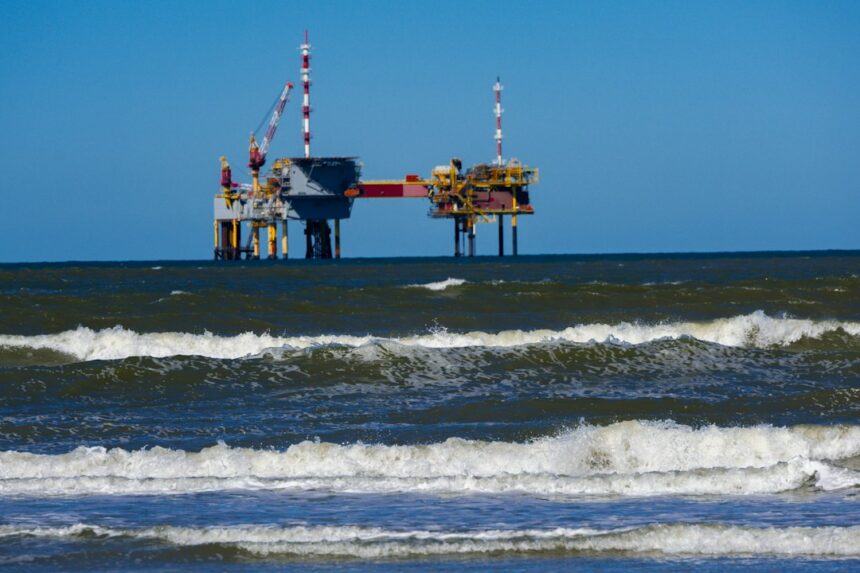
Featured image: illustrative offshore energy infrastructure; photo by Julia Taubitz via Unsplash.