

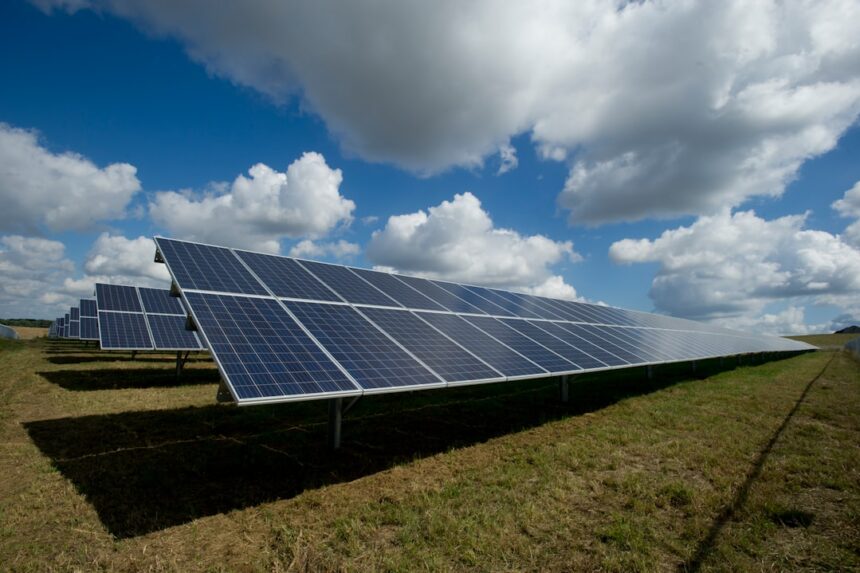
The Australian Renewable Energy Agency will invest $25 million in a new large-scale solar innovation program designed to test robotics, automation and digital technologies directly on commercial renewable-energy projects.
The three-year Lightspeed initiative, led by Equans Solar & Storage Australia, will create a live testbed across utility-scale solar and storage developments in New South Wales, Queensland and Victoria.
The objective is commercial rather than purely experimental: reduce the cost and complexity of building and operating large renewable-energy assets by proving new technologies in real construction and operating environments.
Robotics moves onto the solar worksite
The first technology scheduled for testing is the Nextpower Ranger, an autonomous inspection robot that will be deployed at an Australian solar farm for the first time.
ARENA says the broader Lightspeed portfolio could include as many as 20 innovation projects spanning construction, operations and maintenance, automation and digital coordination.
That gives the program relevance beyond a single technology vendor. Large solar developments involve highly repetitive work across large sites, making them natural candidates for autonomous equipment, machine vision, remote inspection and digitally coordinated construction systems.
If those tools can reduce labour intensity, rework, downtime and safety exposure, they could improve project economics at a time when renewable developers are under pressure to deliver more capacity while controlling rising construction costs.
A pathway from pilot to standard equipment
One of the persistent barriers to industrial automation is the gap between a successful pilot and routine commercial adoption. Developers can be reluctant to deploy unproven systems on live projects where construction schedules and availability targets are critical.
The Lightspeed model is intended to close that gap by creating repeatable opportunities to trial technologies within Equans’ project pipeline, collect real operating data and publish findings for the wider industry.
ARENA expects successful deployments to help robotics and digital systems move from experimental tools toward standard construction and operational equipment.
The program also has a supply-chain dimension. As more automated systems are used locally, equipment manufacturers may have stronger incentives to establish Australian support, maintenance and training capability.
Productivity becomes a bigger energy-transition issue
Australia’s renewable build-out is increasingly constrained not only by approvals and grid connections, but by the practical productivity of construction and operations.
Large volumes of solar, storage and transmission infrastructure will need to be delivered over a relatively short period. That puts pressure on engineering resources, skilled labour, project management and specialist contractors.
Automation will not eliminate those constraints, but it can change the type of labour required and improve output per worker. ARENA says the program may shift some roles away from manual construction toward higher-skill robotics operation, monitoring and maintenance.
The commercial test will be whether the technology can produce measurable reductions in levelised energy costs and project risk. If it does, the Lightspeed portfolio could become an important proving ground for a more automated Australian renewable-energy construction sector.
Sources: Australian Renewable Energy Agency, 23 September 2026; ARENA Lightspeed Solar Portfolio project page.
Featured image: American Public Power Association / Unsplash.