
Planned private investment across the Western Sydney Aerotropolis has reached A$34.6 billion, tripling in 18 months and overtaking the A$29 billion public-infrastructure program that helped create the market. The figure is a powerful measure of confidence around the new airport and Bradfield City, but it is not yet a measure of delivered economic capacity.
- Public infrastructure has created a private market
- The headline total conceals different delivery paths
- Land value will follow infrastructure sequencing
- Bradfield is trying to bridge research and production
- Power, housing and skills will determine the pace
- The next evidence will be completions and operating tenants
The NSW Government’s 8 October update places projects that are planned, approved or underway into the private-investment total. That breadth matters. A committed logistics facility, an approved data centre and a prospective development do not carry the same construction certainty, employment profile or commissioning risk.
Even so, the scale signals a structural change in Western Sydney’s investment geography. Western Sydney International Airport has begun freight operations and is preparing for passenger services, while the Metro, M12 Motorway, water and energy upgrades are giving industrial developers a coordinated platform around which to make long-term decisions.
Public infrastructure has created a private market
The Aerotropolis is an example of government capital being used to reshape private investment rather than simply deliver a standalone asset. The airport provides the international gateway. Roads and Metro provide access. Utilities and precinct planning determine how quickly land can support intensive industrial uses. Bradfield City is intended to add research, advanced manufacturing and commercialisation capacity.
That combination explains why Amazon, ALDI and a growing group of logistics, manufacturing, data-centre and technology proponents have selected locations in the region. Many of those businesses need more than inexpensive land. They need predictable freight connections, high-capacity power, digital infrastructure, water, planning certainty and access to a large labour market.
The public investment therefore operates as enabling capital. Its return will not be captured only through airport revenue or transport patronage. It will also be measured by industrial land brought into productive use, private facilities completed, exports handled, businesses attracted and jobs available to residents who currently travel long distances for employment.
The headline total conceals different delivery paths
Aerotropolis projects fall into several distinct markets. Warehousing and distribution centres can often move through design and construction relatively quickly once access and servicing are secured. Data centres require major electricity connections and water strategies. Advanced manufacturers need specialised buildings, equipment qualification, reliable inputs and customer contracts. Research facilities need tenants and collaboration models that survive beyond the opening ceremony.
Each sector creates a different supplier ecosystem. Logistics projects generate civil, warehouse, automation, racking and fleet requirements. Data centres create work across power, cooling, switchgear, controls and long-term maintenance. Manufacturers need production engineering, tooling, clean environments in some cases, and dependable local component and service providers.
This is why the A$34.6 billion total should be read as a portfolio, not a single project pipeline. Some investments may reach construction quickly; others will depend on tenant commitments, network upgrades, financing or demand that remains several years away.
Land value will follow infrastructure sequencing
The investment surge will also reshape the economics of industrial land. Parcels with confirmed road access, utility capacity and planning pathways should command a premium over sites that are geographically close to the airport but not yet ready for intensive use. That distinction is easy to lose when the entire Aerotropolis is discussed as one market.
Developers will need to match buildings to users whose operational requirements are known. Highly specialised facilities can attract long leases but carry greater reletting risk if the original occupant changes strategy. More flexible warehouses are easier to repurpose, yet may contribute less to the advanced-manufacturing ambition attached to Bradfield.
Government faces a sequencing choice of its own. Utilities built too far ahead of demand can leave capital underused; infrastructure delivered too late can strand approved private projects and weaken investor confidence. Transparent connection queues and realistic precinct staging will therefore matter to both public balance sheets and private feasibility models.
Bradfield is trying to bridge research and production
The latest market test is the expression-of-interest process for Bradfield City’s second building, scheduled to open in 2028. The offer includes 380 square metres of serviced advanced-manufacturing hall space, a further 280 square metres of manufacturing area and 1,150 square metres of flexible commercial offices.
Those spaces are modest beside the region-wide investment number, but their role is strategic. They are intended to allow a company to combine research, prototyping, manufacturing and commercial operations in one location, alongside the Advanced Manufacturing Readiness Facility and a semiconductor advanced-packaging facility.
Australia’s recurring industrial problem is not a shortage of research ideas. It is the gap between a promising prototype and repeatable production at commercial scale. A facility that brings equipment, technical staff, investors and customers into the same precinct can shorten that path, provided occupancy is genuine and the operating model does not depend indefinitely on public subsidy.
Power, housing and skills will determine the pace
The largest delivery risks sit beyond the site boundary. High-load industrial and digital projects need electricity connections that may take years to plan and build. Workers need housing within practical reach of new jobs. Companies need technicians, engineers, operators and construction trades at a time when other national infrastructure programs are competing for the same capabilities.
These constraints can change project sequencing. A developer may hold approved land while waiting for a network connection. A manufacturer may establish a smaller facility first while training its workforce. Contractors may face overlapping peaks across airport-related works, Bradfield buildings, utilities and private developments.
Procurement strategy will matter as much as capital. Breaking work into packages that local firms can credibly deliver can broaden participation, but fragmented interfaces can raise coordination risk. Larger contracts can simplify accountability, yet exclude smaller suppliers unless strong subcontracting and local-industry arrangements are built into delivery.
The long-term labour question is also broader than construction. A region filled with automated warehouses and advanced plants needs technicians, maintenance specialists, production managers and software capability after the builders leave. Training providers and employers will need to align courses with equipment and operating roles that actually reach the precinct, while transport and housing settings determine whether those workers can remain nearby.
The next evidence will be completions and operating tenants
The Aerotropolis has moved beyond the stage where confidence is measured only by government announcements. The next milestones are visible and commercial: passenger operations at the airport, completion of Bradfield’s second building in 2028, signed anchor tenants, energised industrial sites and businesses moving from construction into production.
For contractors and suppliers, the opportunity is broad but uneven. The strongest near-term work will sit behind projects with land, approvals, utilities, customers and finance aligned. For government, the test is whether its A$29 billion platform turns the private pipeline into a functioning economic district rather than a collection of disconnected property investments.
Western Sydney now has investment scale. The harder phase is to turn that scale into operating capacity, export activity and durable jobs before cost escalation and infrastructure bottlenecks weaken the pipeline.
The aggregate investment figure is useful for signalling momentum. Future updates will be more valuable if they distinguish proposed, approved, financed, under-construction and operating projects, allowing businesses to separate near-term procurement from longer-dated opportunity and giving residents a clearer view of when promised employment will materialise.
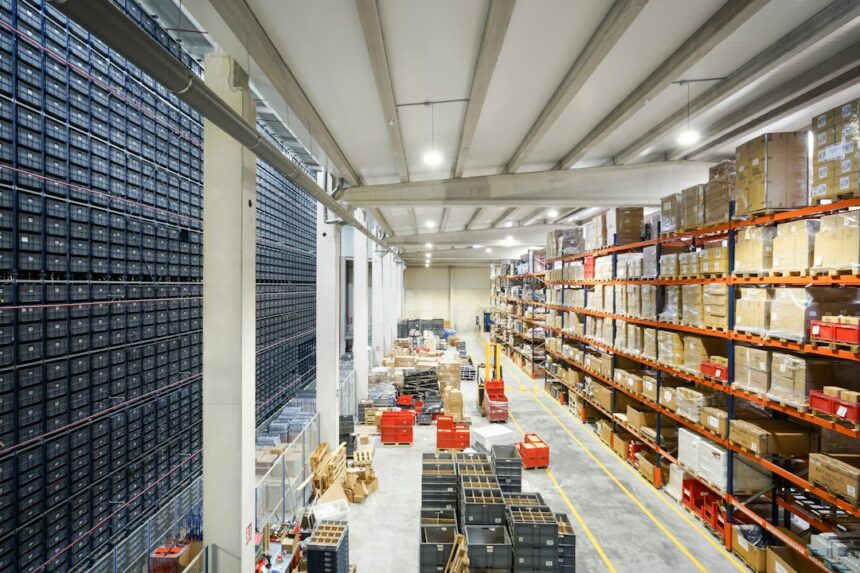
Sources: NSW Government, Aerotropolis investment update, 8 October 2026; Bradfield Development Authority, private investment update; Bradfield City, second-building tenancy EOI. Featured image: illustrative industrial warehouse, Alberto Rodríguez / Unsplash; not the Aerotropolis or a named project.