
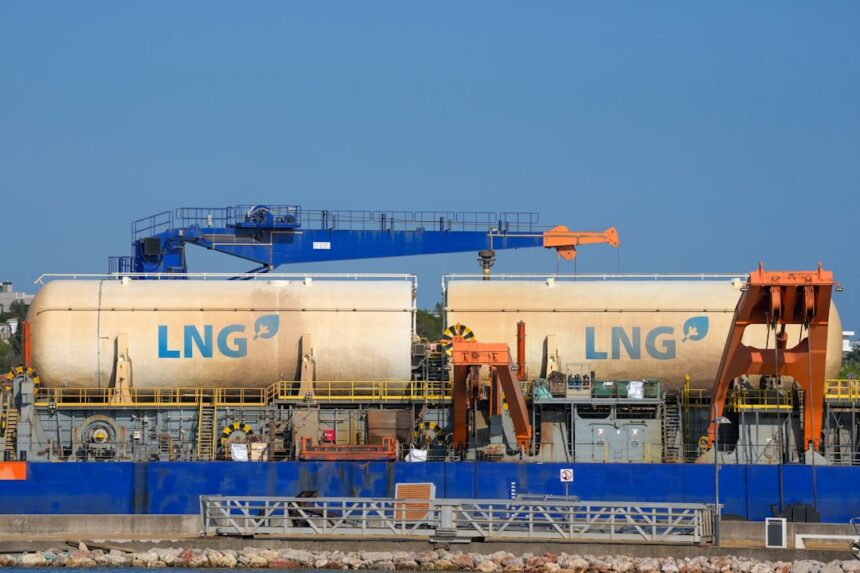
Santos is broadening its LNG strategy beyond simply marketing production from Australian assets, using new agreements with POSCO and Western LNG to build a more flexible regional supply portfolio.
On 15 September, Santos announced two non-binding commercial arrangements. The first covers key terms for a 10-year LNG supply agreement with POSCO Steel, with deliveries targeted to commence in 2030 or 2031. The second is a heads of agreement to purchase about one million tonnes per annum of LNG from the proposed Ksi Lisims project in British Columbia for up to 20 years from around 2031.
The POSCO arrangement is structured on a delivered-ex-ship basis. That means Santos would be responsible for sourcing and delivering the LNG to the buyer, rather than merely selling cargoes at an Australian terminal. For POSCO, the fuel is intended to strengthen long-term energy security during the company’s transition toward lower-carbon steelmaking.
The Canadian agreement works in the opposite direction. Santos would acquire LNG from Ksi Lisims on a free-on-board basis, adding third-party supply that could be marketed into its broader customer portfolio.
Together, the agreements show how the LNG business is evolving. Producers increasingly compete not only on reserves and liquefaction capacity, but on portfolio flexibility — the ability to combine equity production, contracted third-party volumes, shipping and customer commitments across multiple geographies.
That matters in Asia-Pacific because demand profiles are becoming less uniform. Buyers are balancing security of supply with decarbonisation goals, while sellers are trying to optimise cargo destination, pricing and contract duration across different markets.
Santos’ Australian portfolio already includes LNG exposure through Darwin and Gladstone. Adding Canadian supply could give the company another source closer to North Asian markets while reducing reliance on any single production basin.
Neither transaction is yet a final sale-and-purchase agreement. Both remain subject to definitive documentation, corporate approvals and, in the case of Ksi Lisims, the development of the underlying project.
For Australian energy contractors and suppliers, the significance is indirect but important. A larger and more diversified LNG marketing platform can strengthen the commercial case for upstream investment, life-extension work and new gas developments that feed the portfolio.
Source: Santos.
Image: Markus Kammermann / Unsplash.