
Sydney startup MP Space has raised A$23 million to industrialise a part of the space economy that rarely attracts the public attention of rockets or satellites: the batteries and power electronics that keep spacecraft operating after launch.
Founded in Australia in 2024 by former Tesla engineers Jay Manley and Sam Paterson, the company is building modular lithium-ion battery systems for low-Earth-orbit satellites and other spacecraft. The seed round is backed by Blackbird, Systemiq, Seraphim Space, Speedinvest and MFV Partners, according to reporting accompanying the announcement.
The funding gives MP Space the means to move from advanced engineering into repeatable production. It does not, however, remove the central test for any space-hardware company: proving reliability in orbit, then converting design selections into recurring deliveries.
From electric vehicles to orbital power
Manley and Paterson arrived at the problem through high-volume battery manufacturing rather than traditional aerospace. MP Space says Manley spent eight years across Tesla’s powertrain and energy engineering teams, contributing to Powerwall 2 and Powerwall 3 and helping take energy systems from concept into mass production.
Paterson’s background links product engineering with industrial scale. The company says he worked on multiple generations of Tesla Model S and Model X battery packs and helped take the Model 3 battery from concept through mass manufacture. He later worked at Apple and autonomous-vehicle company Zoox before joining Australian cultivated-meat venture Vow, where he built manufacturing capability.
The founders saw a commercial gap between the bespoke engineering traditions of aerospace and the standardised production methods used in electric vehicles and energy storage. Spacecraft batteries must survive vibration, radiation, temperature swings and years without physical servicing. They have traditionally been designed around an individual mission, making them expensive and slow to integrate.
MP Space’s proposition is to make that subsystem more repeatable. Rather than begin with a custom pack for every satellite, it offers configurable platforms that incorporate the battery-management system, survival heaters, electrical protections, launch inhibits and communications interface in a single package.
A product designed for integration
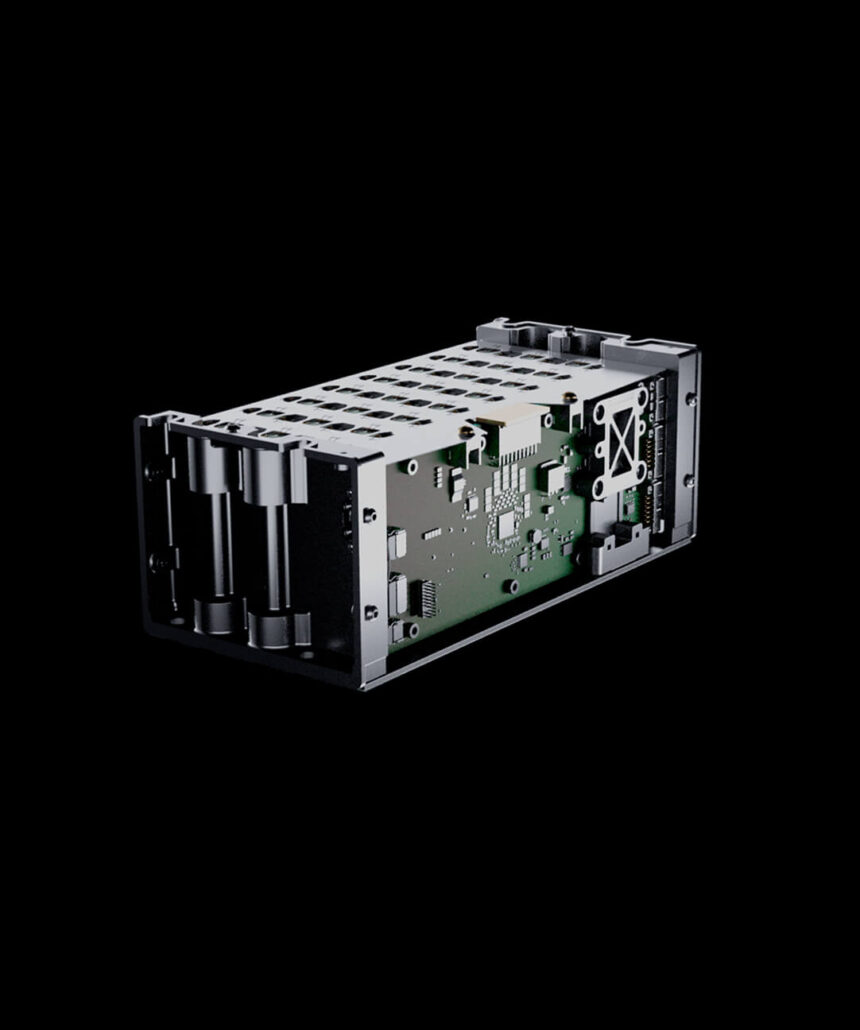
The first public platform is Pack2. MP Space lists a 432 watt-hour version weighing 2.42 kilograms and an 864 watt-hour version weighing 4.6 kilograms, both operating around a 28.8-volt nominal architecture. The company also offers a configurable battery-management core for missions that require different cell arrangements.
Those specifications matter because mass and integration time are commercial constraints in orbit. A lighter power system can preserve payload capacity, while a pre-engineered control architecture can reduce the non-recurring design work borne by a satellite manufacturer.
The business model is therefore closer to a specialist industrial supplier than a software subscription company. MP Space must sell qualified hardware into spacecraft programs, support customer integration and earn repeat orders as constellations expand. Software remains important because battery behaviour, monitoring and fault management are programmed, but it is attached to a physical product that must perform without failure.
The company’s website says its systems have been designed into more than 460 spacecraft and that more than 100 systems are shipping in 2026. Media coverage of the funding round put the design figure above 500. These are company-supplied traction measures, and a design-in is not the same as a launched, operational unit. The most consequential near-term milestone is flight heritage: evidence that the product has operated successfully in orbit.
Why satellite power is becoming harder
Satellite operators are asking spacecraft to do more. Higher-performance sensors, on-board computing, communications payloads and propulsion systems increase power requirements. At the same time, lower launch costs and the growth of constellations favour products that can be manufactured repeatedly rather than redesigned for each mission.
That combination gives MP Space a credible opening. The company is not attempting to build an entire launch vehicle or satellite platform. It is targeting a component category used across many missions, then seeking to expand from batteries into broader electrical power systems.
An endorsement published on the company’s website from SkyKraft chief executive Michael Frater highlights the team’s judgement and execution experience in battery and power systems. MP Space is also working with battery-modelling specialist About:Energy, which says its software was used to compare cells against satellite mission profiles before committing to a design.
These relationships strengthen the technical case, but they do not disclose contracted revenue, customer concentration or the economics of production. MP Space is privately held and has not published audited financial results or a valuation. The A$23 million raise should therefore be read as investor support for the founders and product thesis, not proof that commercial scale has been achieved.
The manufacturing challenge
Hardware companies absorb cash differently from software businesses. MP Space needs components, test equipment, quality systems, inventory and skilled engineers before customer payments necessarily arrive. Space qualification adds thermal-vacuum, vibration and environmental testing, while launch schedules can shift for reasons outside the supplier’s control.
Reliability also creates a demanding trade-off. Standardisation can lower cost and shorten delivery times, but customers will still require mission-specific assurance. A pack that is easy to configure must not become difficult to certify. As order volumes rise, the company will need production discipline that preserves traceability and test coverage without recreating bespoke manufacturing for every client.
Competition will come from established aerospace suppliers, satellite manufacturers with in-house power teams and newer specialists pursuing standardised components. MP Space’s defence is the founders’ experience building batteries at scale, but automotive production knowledge must be adapted to much lower volumes and a harsher operating environment.
The next proof point
MP Space has selected a narrow problem with global reach. Its Sydney base gives Australia a potential foothold in the supply chain for satellite constellations without requiring a domestic customer to own the entire mission.
The next phase will be measured through successful flights, repeat orders and manufacturing yield rather than the size of the funding headline. If the company can turn design selections into reliable orbital performance, it could export a high-value subsystem from Australia into a market that increasingly values standardisation.
The A$23 million round buys time and production capacity. Flight heritage will determine whether MP Space’s electric-vehicle manufacturing thesis can become enduring space infrastructure.
Photo: MP Space Pack2 battery platform, courtesy of MP Space.
Sources: MP Space company and team information; MP Space product specifications; About:Energy MP Space case study; Australian Space Forum profile of Sam Paterson; InnovationAus, 27 October 2026; The Australian, 27 October 2026.