
The Federal Court has ruled the Commonwealth heritage declaration affecting Regis Resources’ McPhillamys Gold Project legally invalid, removing a major barrier to the central-west New South Wales development while stopping short of clearing the mine to proceed.
Regis told the ASX on 14 October that Justice James Stellios had invalidated the declaration made under section 10 of the Aboriginal and Torres Strait Islander Heritage Protection Act 1984. The declaration, issued by former environment minister Tanya Plibersek in August 2024, affected land required for the project’s planned tailings storage facility.
The Court’s decision concerned the process used to make the declaration, not the merits of the cultural heritage claim. Current Environment Minister Murray Watt must now consider the judgment and the next steps, with Regis expecting the section 10 application to be redetermined.
A project pathway reopens, not a final approval
McPhillamys, near Blayney, is one of Australia’s largest undeveloped open-pit gold projects. Regis reports an ore reserve of 56 million tonnes grading 1.1 grams a tonne for 1.89 million ounces of gold.
The ruling restores an important development option, but it does not resolve the project’s timetable. A new ministerial process could take time and could still produce an outcome unfavourable to the company. The Commonwealth is also reviewing the judgment, while the Court’s full reasons are expected to provide further guidance on the procedural failure.
Regis is therefore continuing an alternative design described in its recent pre-feasibility work. That approach would combine filtered processed ore and waste rock in an integrated waste landform, avoiding the area covered by the invalid declaration.
Two designs now shape the commercial decision
The practical consequence is that McPhillamys again has more than one potential delivery pathway. The original design could return to consideration after redetermination, while the alternative offers a route intended to reduce exposure to the disputed area.
For engineering, mining-services and environmental contractors, the distinction matters. Tailings storage and integrated waste landforms involve different earthworks, water-management, materials-handling and rehabilitation scopes. Any change in the preferred design would flow through capital estimates, tender packaging and construction sequencing.
The ruling also sharpens the importance of cultural heritage process for major-project proponents. It does not diminish heritage protection. It does show that consultation, evidence and procedural fairness can determine whether a ministerial decision survives judicial review.
Redetermination becomes the next milestone
Regis says it will participate in any redetermination and wants the process completed promptly after more than two years of uncertainty. The company has not treated the Court outcome as permission to start construction.
Investors and suppliers should therefore watch three milestones: publication of the Court’s detailed reasons, the Commonwealth’s formal response, and Regis’ comparison of the original and alternative development cases. Until those steps are resolved, McPhillamys has regained a pathway rather than a start date.
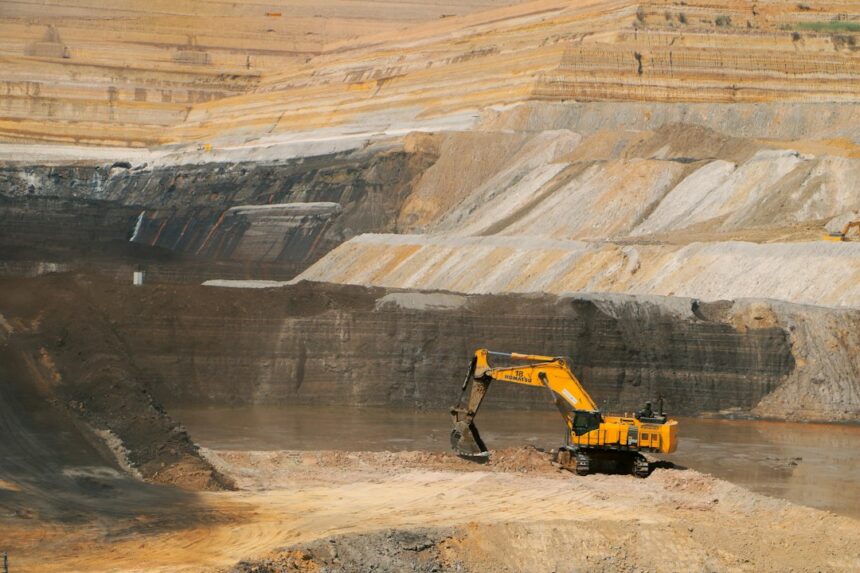
Sources: Regis Resources ASX announcement, 14 October 2026; ABC News, 14 October 2026; Regis Resources, McPhillamys project. Featured image: Abdul Basit / Unsplash; illustrative only and not the McPhillamys Gold Project.