

Australian east-coast gas buyers have contracted substantially more supply for 2027 and 2028 at broadly stable prices, but the latest ACCC report shows that the market’s immediate comfort masks a growing winter dependence on Queensland production, storage and pipeline capacity.
Buyers contracted 51 petajoules of gas during the first half of 2026 for delivery in 2027, more than double the volume booked at the same point last year. A further 43 petajoules was contracted for 2028, exceeding the comparable volumes for the previous two contracting cycles.
Average long-term contract prices remained around A$12 to A$13 a gigajoule. Most agreements signed between April and June used fixed pricing rather than links to international commodity markets, according to the competition regulator.
For manufacturers and other large users, those results improve near-term budget certainty. They do not settle the larger question of where reliable southern supply will come from as mature fields decline.
A comfortable summer is not a secure winter
The ACCC forecasts an east-coast surplus of at least 5 petajoules in the first quarter of 2027 even if LNG producers export all their uncontracted gas. The Department of Industry puts the potential surplus at 5 to 15 petajoules depending on export behaviour.
January to March is normally a lower-demand period. Warmer conditions reduce heating use and can create an opportunity to refill storage before winter. The regulator expects southern states to have enough gas in the quarter, although February may require additional Queensland supply, withdrawals from storage or more southern production.
The sharper signal sits in the April-to-September outlook. Southern production is expected to fall 64 petajoules short of demand through winter 2027. That gap must be met through north-to-south flows, storage withdrawals, demand response or other supply adjustments.
Pipeline and storage economics move to the centre
A market can hold sufficient gas in aggregate and still experience regional stress if transport capacity, storage inventories or daily deliverability are constrained. Industrial users care about molecules at their facility, not only a national balance.
That puts pipeline scheduling and storage replenishment at the centre of commercial planning. Gas that is available in Queensland must be able to move south when households, generators and factories need it. Storage has to be filled before peak demand rather than after a shortage emerges.
Infrastructure owners therefore gain a more important role as production geography changes. Capacity expansions, compression, storage services and transparent scheduling can all affect delivered prices. They can also determine which users carry interruption risk during a cold period or an electricity-system event.
Stable contracts improve certainty, not affordability for everyone
The reported A$12 to A$13 a gigajoule average is a useful market marker, but it does not mean every buyer secured that outcome. Contract length, volume, load profile, location, flexibility and transport arrangements all influence the delivered price.
Larger buyers can often run formal procurement processes and negotiate around timing. Smaller manufacturers may have less leverage and may buy shorter terms or through retailers. Businesses exposed to international competition can find even a stable domestic price difficult if overseas competitors have access to cheaper energy.
The increase in contracted volumes is nevertheless important. It indicates buyers and producers are reaching longer-term agreements rather than relying entirely on volatile spot markets. Fixed-price contracts also suggest the domestic market has been partly insulated from higher international prices during the contracting period covered by the report.
Contracting earlier can reduce exposure to a tightening market, but it also requires buyers to forecast their own production accurately. Take-or-pay obligations can become costly when demand falls, while contracts with too little flexibility may not suit plants with seasonal or volatile output. Procurement teams therefore have to balance price certainty against volume risk rather than treating a longer term as automatically safer.
Policy changes must preserve investment signals
The market data arrives as the Commonwealth develops a domestic gas reservation scheme. Reservation can improve confidence that export projects will make volumes available locally, but its design will influence incentives to develop new fields, contract supply and invest in transport.
The policy challenge is not simply to maximise a headline surplus. Producers need enough confidence to invest, industrial users need prices and terms that support operations, and regulators need mechanisms that work before periods of scarcity. Poorly calibrated obligations could create apparent supply without ensuring that gas is deliverable to the regions and customers that need it.
The ACCC report also reflects conditions as at 30 June. Production, demand, project approvals and contract decisions can change before winter 2027. That makes the next quarterly reports and AEMO updates material inputs for procurement rather than background policy documents.
The next contracting cycle carries more weight
Commercial buyers should read the report as a prompt to examine term, location and flexibility together. A contract can protect commodity price while leaving transport or interruption exposure unresolved. Storage rights and alternative-fuel capability may be valuable where production decline is most acute.
For producers and infrastructure businesses, the opportunity lies in credible southern supply, transport and storage projects with customers willing to commit. For government, the near-term surplus creates room to design policy carefully, but not a reason to ignore the 64-petajoule winter gap.
The east-coast market appears well supplied for early 2027. Its deeper test will arrive when lower southern production, winter demand and north-to-south infrastructure have to work together in real time.
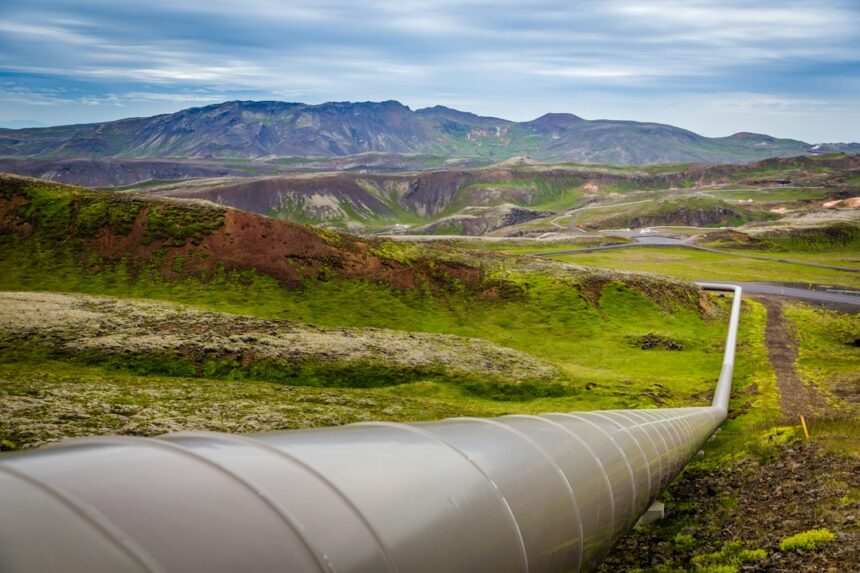
Sources: ACCC, gas contracts and prices, 9 October 2026; ACCC, September 2026 Gas Inquiry report; Department of Industry, Q1 2027 supply outlook; AEMO, Gas Statement of Opportunities. Featured image: illustrative industrial gas pipeline, Mike Benna / Unsplash; not a named Australian pipeline or facility.