
Australia’s freight sector is moving into the next stage of a federal incentive programme designed to shift more goods onto rail, after applications for the first Transport Resilience and Capacity Kickstart round closed on 1 October.
The TRACK pilot offers A$26 million in first-round incentives within a A$52 million programme covering rail and maritime transport. The initial round focuses on rail, with later rounds intended to include both modes.
The programme sits against a national freight task projected to grow 26 per cent between 2020 and 2050. Its broader commercial test is whether alternative transport arrangements can meet shippers’ cost and service requirements across the complete journey.
The full movement determines the cost
Rail line-haul is one part of a supply chain. Collection, terminal handling, transfers and final delivery can all affect the cost and timing of moving goods between the customer’s origin and destination.
For manufacturers, retailers and agricultural businesses, a lower rate on the main transport leg does not necessarily establish a lower delivered cost. Inventory requirements, handling and service frequency also influence the decision.
That makes corridor-level and shipment-level comparisons more useful than a general preference for one mode. The relevant questions are what is being moved, where it needs to go and when it must arrive.
Reliability affects more than the transport bill
Delivery performance can influence production scheduling and working capital as well as freight expenditure.
A shipper able to hold inventory may assess a service differently from one supplying a tightly timed operation. Departure frequency, transfer arrangements and recovery options after disruption can affect the commercial value of a rail movement.
For logistics operators, clearer schedules and contingency arrangements can help customers assess whether a different mode fits their supply chain. Trial movements can test those assumptions before a business makes a larger commitment.
Incentives support the transition
TRACK is intended to improve fuel efficiency, productivity and resilience. The first-round announcement describes incentives for shifting freight rather than A$26 million of newly awarded rail construction work.
The distinction matters for businesses assessing the programme. An application opportunity is not a contract award, and support for a trial does not establish that a movement will remain commercially viable once the support period ends.
The longer-term result will depend on freight volume, capacity, scheduling and the arrangements at each end of the route. A workable alternative needs to meet the customer’s complete delivery requirement.
Programme outcomes become the next milestone
The reviewed announcement establishes the first-round timetable and programme scope, not a list of successful recipients. Applications are now closed, so the next relevant developments are funding decisions and the movements supported.
For Australian supply chains, resilience means having alternatives that can be used when required. The appropriate arrangement depends on the goods, locations and service needs.
TRACK provides a mechanism to test the transition. Its lasting effect will be measured by whether supported movements become reliable, repeatable services within the wider freight network.
Sources: Federal infrastructure announcement: TRACK and freight panel; TRACK programme information; TRACK grant opportunity guidelines.
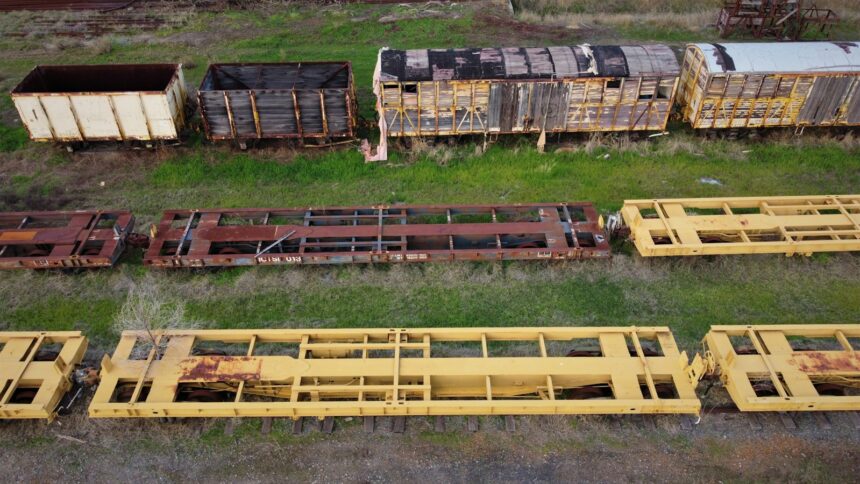
Image: Iain / Unsplash. Illustrative stock image.