
Australia’s renewable-energy transition is moving into a more demanding phase. The policy targets and project announcements remain important, but the commercial test is increasingly whether projects can reach financial close, mobilise contractors, secure grid access and move into sustained construction.
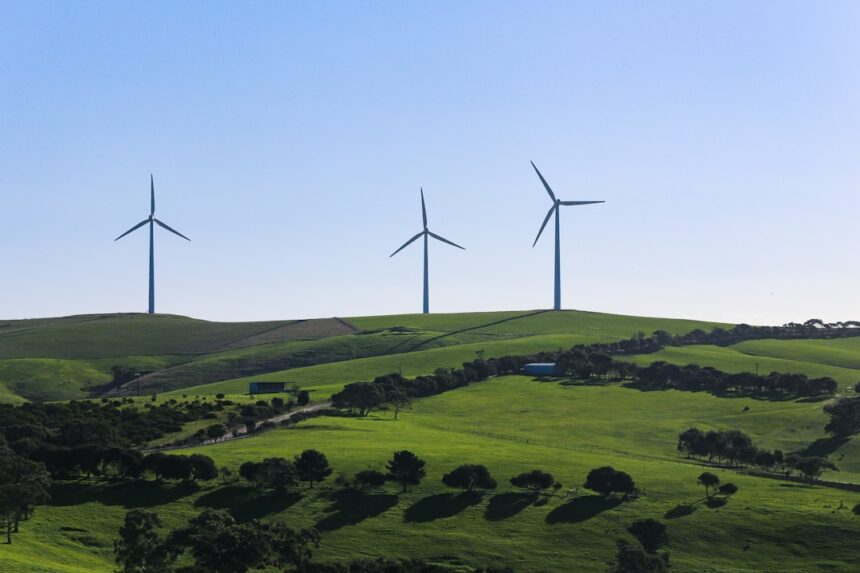
Several developments over the past week underline that shift. The 130MW first stage of Western Australia’s Kondinin Wind Farm has reached financial close with $430 million in debt funding. In Victoria, major contractors are progressing energy-hub and transmission work. At the same time, ARENA-backed programs are testing automation as developers look for productivity gains across solar construction.
Financial close is becoming the key dividing line
Australia has no shortage of renewable projects in development. The harder challenge is converting that pipeline into funded assets.
Kondinin is instructive because it has moved beyond approvals and ownership structuring into bank-backed construction. ANZ, Commonwealth Bank, Deutsche Bank, HSBC and Westpac are participating in the debt package, demonstrating that lenders remain willing to support projects with credible contracting structures and delivery plans.
That matters to the supply chain. A project at financial close can begin issuing real work packages rather than simply maintaining a development pipeline.
Execution risk is becoming more visible
Renewable construction is capital intensive and logistically complex. Wind projects require turbine transport, heavy lifts, foundations, road works, substations and grid commissioning. Solar developments face similar challenges around labour productivity, module installation, electrical work and connection.
ARENA’s Lightspeed program with Equans Solar & Storage is effectively an attempt to attack that productivity challenge directly. Robotics, autonomous inspection and digital construction systems are being tested in live commercial environments rather than isolated pilots.
If those systems reduce labour intensity or improve commissioning speed, they could become increasingly important as Australia tries to deliver more infrastructure with a constrained engineering and construction workforce.
Transmission remains inseparable from generation
Generation projects cannot be viewed in isolation from the network. New renewable zones, industrial loads and storage projects all depend on transmission capacity and connection sequencing.
That is why contractors with exposure across both generation and network infrastructure are increasingly well positioned. The same investment cycle that creates wind and solar farms also creates demand for substations, high-voltage lines, batteries, controls and grid-services capability.
The supplier opportunity is broadening
The commercial opportunity now extends far beyond turbine and panel suppliers. Civil contractors, logistics providers, electrical firms, fabrication businesses, software vendors and specialist maintenance companies are all becoming part of the transition economy.
For investors, the distinction between announced capacity and executable capacity is also becoming more important. Projects with capital, grid pathways, contracting depth and credible delivery teams should command a different level of confidence from projects still relying on aspirational timelines.
Australia’s energy transition remains one of the country’s largest capital programs. But its next chapter will be defined less by targets and more by construction discipline.
Sources: Foresight Group Kondinin financial-close announcement; ARENA Lightspeed Solar Portfolio materials; relevant project and contractor disclosures across the Australian renewable-energy pipeline.