
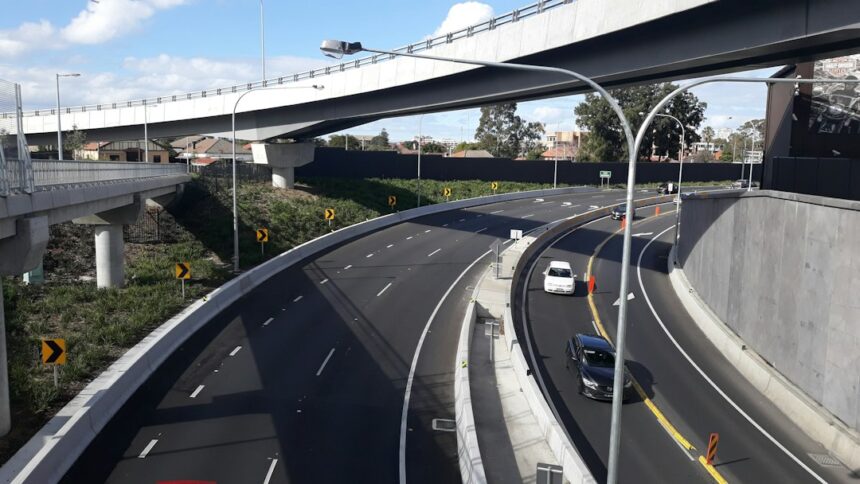
Western Sydney’s infrastructure story has moved decisively from planning to delivery. Five major road contracts worth almost A$3 billion are now signed, concentrating a large volume of civil construction around the region’s fastest-growing employment, logistics and residential corridors.
The package, jointly funded by the Australian and New South Wales governments and announced on 21 September, includes two A$1 billion contracts and three further projects valued at A$440 million, A$247 million and A$190 million. Construction is expected to begin later in 2026.
For contractors and suppliers, the significance is not simply the headline value. The five projects create a concentrated procurement ecosystem around earthworks, pavement, structures, utilities, traffic management, drainage, active transport, materials, plant, environmental services and subcontract labour.
Five contracts, one regional construction market
The largest awards are Mamre Road Stage 2 and the Elizabeth Drive upgrade, both valued at A$1 billion and both awarded to the Gamuda BMD joint venture.
Mamre Road Stage 2 will upgrade 6.1 kilometres between Erskine Park Road and Kerrs Road at Kemps Creek, widening the corridor and improving intersections and active-transport links. The project directly supports the Mamre Road employment area, one of Western Sydney’s major industrial growth precincts.
Elizabeth Drive will be widened to two lanes in each direction between Devonshire Road and Badgerys Creek Road. Its strategic role is obvious: it is one of the key access corridors to Western Sydney International Airport and surrounding development land.
Fulton Hogan has been awarded the A$440 million Garfield Road East project, widening the route between Riverstone and Box Hill. BMD Constructions will deliver the A$247 million Henry Lawson Drive Stage 1B upgrade, while Ward Civil & Environmental Engineering will deliver the A$190 million Horsley Drive widening between the M7 and Wallgrove Road.
Together, the awards show a procurement market with a mix of tier-one and large mid-tier capability rather than a single mega-project structure.
The supplier opportunity sits below the head contracts
For the broader construction market, the real opportunity is in the subcontracting and supply chain required to deliver five projects in parallel.
Road widening programs pull through demand for quarry products, asphalt, concrete, reinforcement, drainage systems, barriers, lighting, signage, utility relocations, temporary works, survey, geotechnical services, environmental monitoring and traffic-management capability.
They also create labour competition. Western Sydney already has major airport, logistics, residential and industrial construction underway or planned. The additional road workload will put further pressure on experienced supervisors, machine operators, engineers, project managers and specialist subcontractors.
That makes procurement timing important. Suppliers that wait for construction mobilisation may find the best packages already committed. Businesses with relevant capability should monitor contractor procurement portals, subcontractor expressions of interest and Transport for NSW updates now, while delivery teams are still locking in work packages.
Airport access is becoming a network build, not a single project
The road package also shows how the Western Sydney International Airport is reshaping infrastructure investment beyond the airport boundary.
Elizabeth Drive is the clearest example, but Mamre Road, Horsley Drive and other corridor upgrades improve access between industrial land, motorways, Bankstown Airport, logistics precincts and the new international gateway.
This is creating a network effect. Each project improves the value of adjacent industrial and development land while increasing the need for the next round of connections.
The NSW Government has already identified additional projects moving through planning or procurement, including Spring Farm Parkway Stage 2, Windsor Road at Rouse Hill, the Picton Bypass, the A$200 million Homebush Bay Drive–Australia Avenue–Underwood Road intersection upgrade and the Bandon Road project.
For suppliers, that matters because the current A$3 billion package is not the end of the pipeline. It is part of a wider multi-year program.
Why the concentration matters
Infrastructure spending is often analysed project by project. Western Sydney is better understood as a regional construction market.
Several projects are drawing on the same materials markets, labour pools and specialist subcontractors. That can create efficiencies for suppliers able to serve multiple sites, but it can also amplify cost pressure if capacity tightens.
Contractors with asphalt plants, quarry access, precast capacity, large plant fleets or established local labour networks may have an advantage. So may businesses that can provide repeatable services across projects, such as traffic control, environmental compliance, testing, temporary facilities, survey or workforce logistics.
Industrial land is part of the story
The roads also support a broader shift in Western Sydney’s economic geography. The region is becoming more important for warehousing, manufacturing, freight, aviation services and data infrastructure.
Transport capacity is therefore a business-location issue. Reliable road access affects warehouse productivity, truck turnaround times, labour catchments and the commercial value of industrial sites.
Mamre Road is especially important in this context because the corridor sits beside a large employment precinct where land development depends on transport and utility capacity arriving in step with private investment.
What suppliers should watch
The immediate signals are package releases, subcontractor prequalification, material procurement, utility-relocation scopes and workforce mobilisation. Businesses should also watch for changes in construction sequencing that could shift demand between projects.
Beyond the five signed contracts, the next opportunity is the follow-on pipeline. Planning approvals, tender notices and design releases across Western Sydney are likely to determine where the next wave of supplier work emerges.
The key message is that Western Sydney’s road program is no longer a collection of distant promises. Almost A$3 billion of work is moving into delivery, and the commercial opportunity will increasingly sit with the firms that position themselves inside the supply chain before the major works peak.