
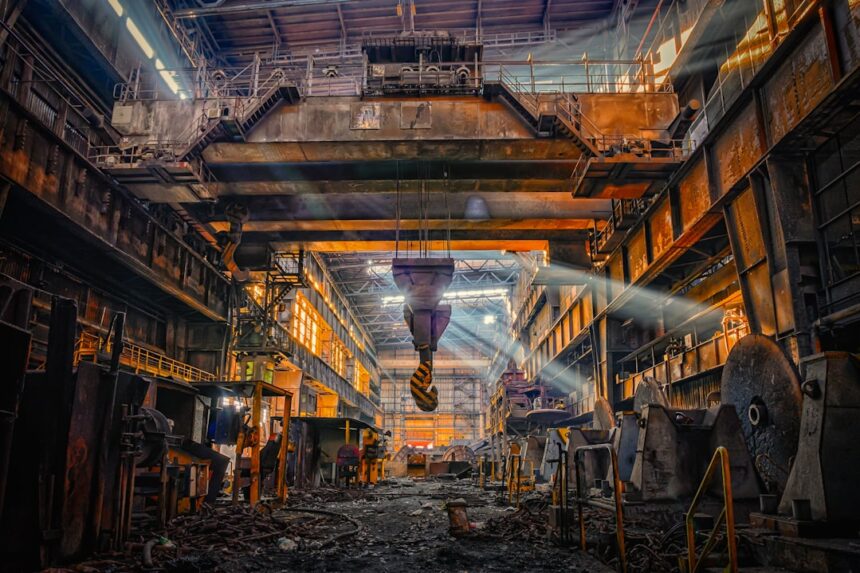
The decision to permanently close the blast furnace at the Whyalla steelworks is more than a workforce event. It fundamentally changes the asset that administrators and governments are trying to sell.
On 14 September, administrators confirmed the 60-year-old blast furnace would not be restarted after being offline since April. The decision is expected to result in the loss of about 500 jobs at the steelworks and roughly 100 contractor roles, according to ABC reporting. The South Australian and Commonwealth governments also announced a $10.2 million support package for affected workers.
The immediate impact on Whyalla is severe. The steelworks is one of the city’s economic anchors and a major customer for local contractors, transport providers, maintenance firms and service businesses. Every direct job lost carries a wider regional multiplier.
But the commercial significance is equally important. A potential buyer is no longer evaluating a conventional integrated steelworks with a blast furnace that might be returned to service. The sale proposition increasingly centres on how much of the remaining infrastructure can support a different production model — potentially including electric-arc-furnace steelmaking and greater use of lower-carbon iron inputs.
That transition could ultimately align Whyalla more closely with Australia’s broader ambitions around green iron and lower-emissions steel. It also raises the capital requirement. New steelmaking technology, power infrastructure, raw-material handling and associated plant would require substantial investment and a credible long-term energy strategy.
The state government has said the sale process remains on track for completion by the end of 2026. That keeps pressure on administrators KordaMentha and governments to demonstrate that the site can still attract a credible industrial owner despite the closure.
The strategic case for retaining steelmaking capability remains strong. Australia produces large volumes of iron ore yet captures relatively little value through domestic steel production. Whyalla is one of the few places where an existing industrial footprint, port access, workforce capability and nearby renewable-energy potential come together.
The risk is the transition period. The longer production capability is constrained, the harder it becomes to retain specialised workers and suppliers. Contractors with exposure to the site may need to diversify before a new owner and investment program are secured.
For Australian industry policy, Whyalla has become a live test of whether governments can move from protecting a legacy asset to enabling a commercially sustainable replacement model. The blast furnace closure closes one chapter; the sale and redevelopment process will determine whether a new one begins.
Source: ABC News.
Image: Peter Herrmann / Unsplash.